


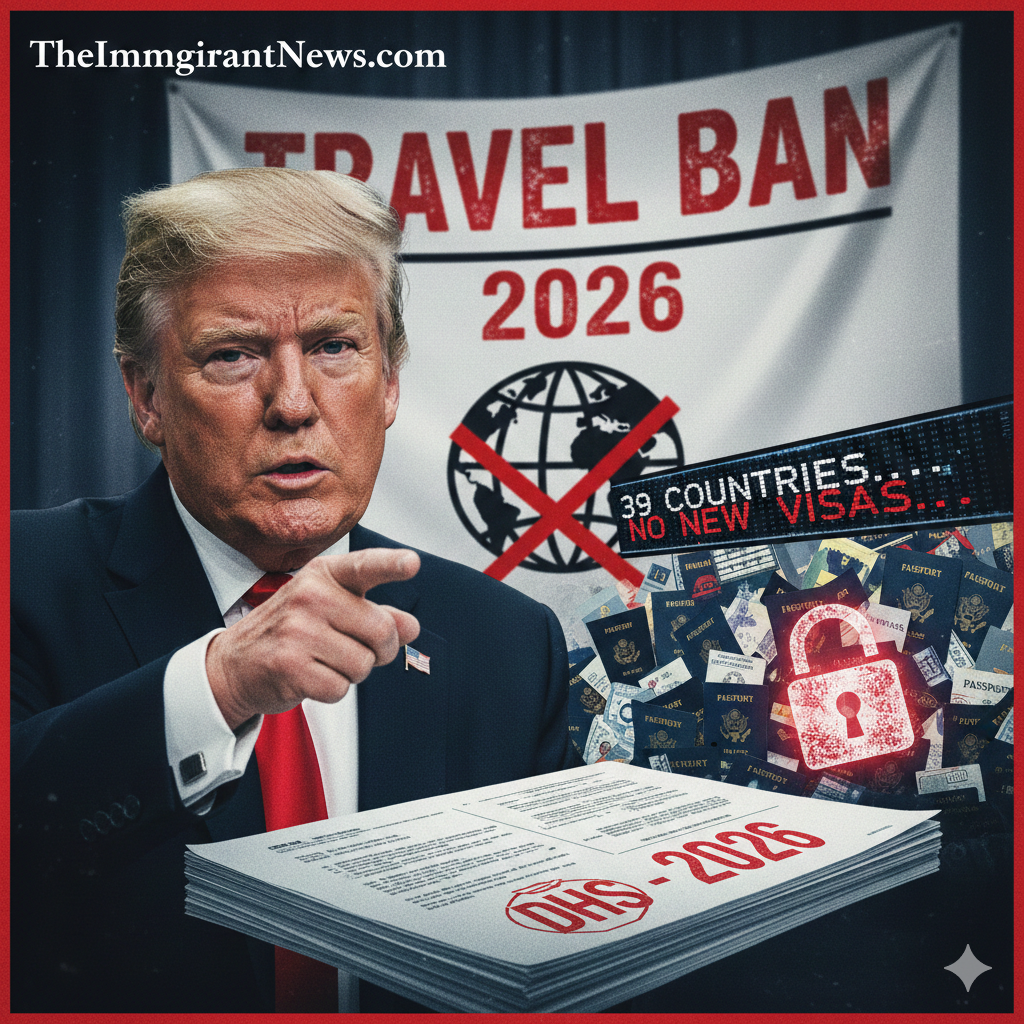
The landscape of American immigration has shifted dramatically. As of January 1, 2026, Presidential Proclamation 10998 has officially expanded the U.S. travel restrictions to include a total of 39 countries and territories.
Building on the previous measures from 2025, this new executive action cites “severe deficiencies in screening and vetting” as the primary reason for the expansion. For families, students, and workers from the impacted nations, the rules are now significantly more rigid.
The Two-Tiered Ban System
The 2026 policy divides affected nations into two distinct groups: Full Restrictions and Partial Restrictions.
1. Full Entry Restrictions (19 Jurisdictions)
Nationals from these countries are suspended from entry as both immigrants and non-immigrants. Effectively, this means no new green cards, tourist visas, or student visas will be issued to citizens of these nations unless a rare individual waiver is granted.
- Existing (from 2025): Afghanistan, Burma (Myanmar), Chad, Republic of the Congo, Equatorial Guinea, Eritrea, Haiti, Iran, Libya, Somalia, Sudan, Yemen.
- Newly Added for 2026: Burkina Faso, Laos, Mali, Niger, Sierra Leone, South Sudan, Syria.
- Special Designation: Individuals using travel documents issued or endorsed by the Palestinian Authority (PA).
2. Partial Entry Restrictions (20 Countries)
For these nations, the ban is focused on immigrant visas and specific high-volume non-immigrant categories including B-1/B-2 (Visitor), F/M (Student), and J (Exchange) visas.
- List of Nations: Angola, Antigua and Barbuda, Benin, Burundi, Côte d’Ivoire, Cuba, Dominica, Gabon, The Gambia, Malawi, Mauritania, Nigeria, Senegal, Tanzania, Togo, Tonga, Turkmenistan*, Venezuela, Zambia, Zimbabwe.
- Note: Turkmenistan is only restricted for immigrant visas; non-immigrant B, F, M, and J categories were recently unblocked.
Critical Exemptions: Who Can Still Enter?
The 2026 proclamation includes several narrow categories that are exempt from the suspension. If you fall into one of these groups, the ban does not legally bar your entry:
- Lawful Permanent Residents: Green card holders remain exempt.
- Existing Visa Holders: Visas issued before January 1, 2026, will not be revoked. However, expect extreme scrutiny at Ports of Entry.
- Dual Nationals: If you hold a passport from a non-banned country and are traveling on that document, you are exempt.
- Diplomatic Travel: Holders of A-1, A-2, C-2, G-1, G-2, G-3, and G-4 visas.
- Special Sporting Events: Athletes and essential support staff for the 2026 FIFA World Cup and upcoming Olympics.
Warning: Previous exemptions for immediate relatives (spouses and children of U.S. citizens) and international adoptions have been eliminated in this 2026 update.
What to Do If You Are Impacted
If you are a national of one of the 39 countries listed above and do not yet have a valid visa, the path forward is difficult.
- Seek a National Interest Waiver: Consular officers have the discretion to grant waivers if you can prove your entry is in the U.S. national interest or that your denial would cause undue hardship.
- Pause International Travel: If you are currently in the U.S. on a valid visa from a banned country, do not leave. If you depart, you may be unable to renew your visa or re-enter.
- Consult Legal Counsel: Because these policies are being challenged in federal courts, the rules may change weekly.
The Immigrant News will continue to monitor the Department of State’s visa issuance data for any shifts in these restrictions.

